Toulouse To Carcassonne Day Trip
Tours & tickets

Hand-picked by our editors — only the best 5 experiences from 27 reviewed.

Open today 10:00–18:30
Attendance: Moderate — summer peak season
Arrive early to avoid ticket office queues.
Free cancellation Instant confirmation Mobile voucher Verified partner Skip-the-line
Tickets

Choose your ticket

Verified partners for every tour, free cancellation where available, and instant confirmation on every booking.

Carcassonne Day Trip from Toulouse with Private Transfer 5 hr
Luxury / Private

Carcassonne Day Trip from Toulouse with Private Transfer

5 (9)
$123
per person
Instant Mobile voucher Flexible — change up to 24h

Visit a stunning fortified medieval town with hassle-free transport and time to wander independently

Reserve
Occitanie Heritage Day Tour: Albi, Carcassonne & Cordes-sur-Ciel 10 hr 30 min
Guided Experience

Occitanie Heritage Day Tour: Albi, Carcassonne & Cordes-sur-Ciel

4.8 (40)
$199
per person
Instant Mobile voucher Flexible — change up to 24h

Journey through three UNESCO and medieval gems with expert guidance, comfortable transport, and lunch

Reserve

Prices from verified partners. Availability updates in real time at checkout. Free cancellation policies apply where shown.

What you'll do

Inside a tour, step by step

  1. 01 15 min

    Entrance

    Arrival at the main gate of the walled city

Highlights

What you'll see inside the attraction

The landmarks, rooms, and views travelers on this tour remember — all visible on a single visit.

Château Comtal

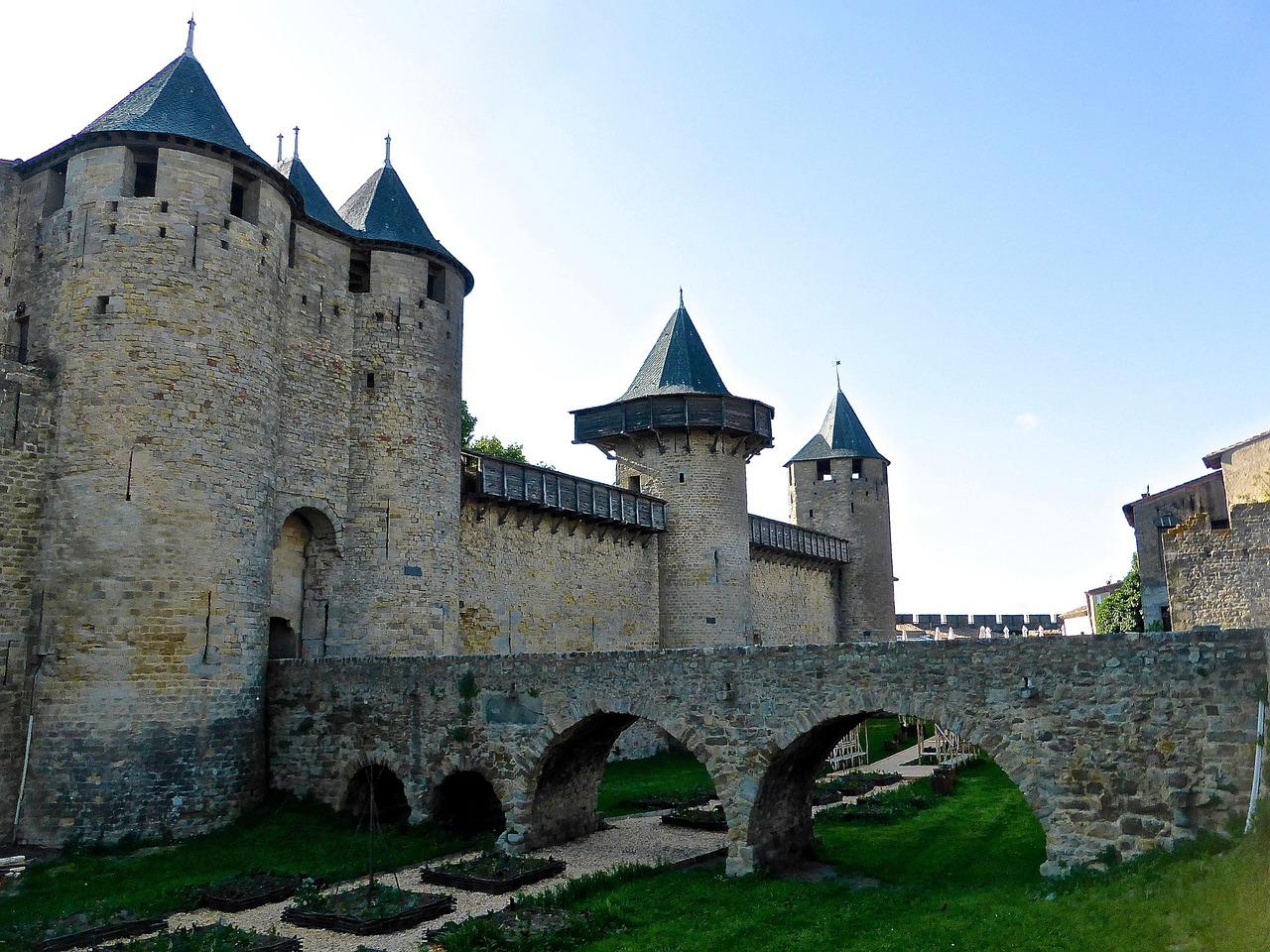
This 12th-century fortress features a stone curtain wall and historic towers. The site offers a deep look into medieval defense strategies.

Basilica of Saints Nazarius and Celsus

Features stained glass windows dating back to the 13th century. It is known for its Romanesque nave and Gothic choir.

The Ramparts

Two lines of walls extend over 3 kilometers. Walking the outer circuit provides views of the surrounding countryside.

Porte Narbonnaise

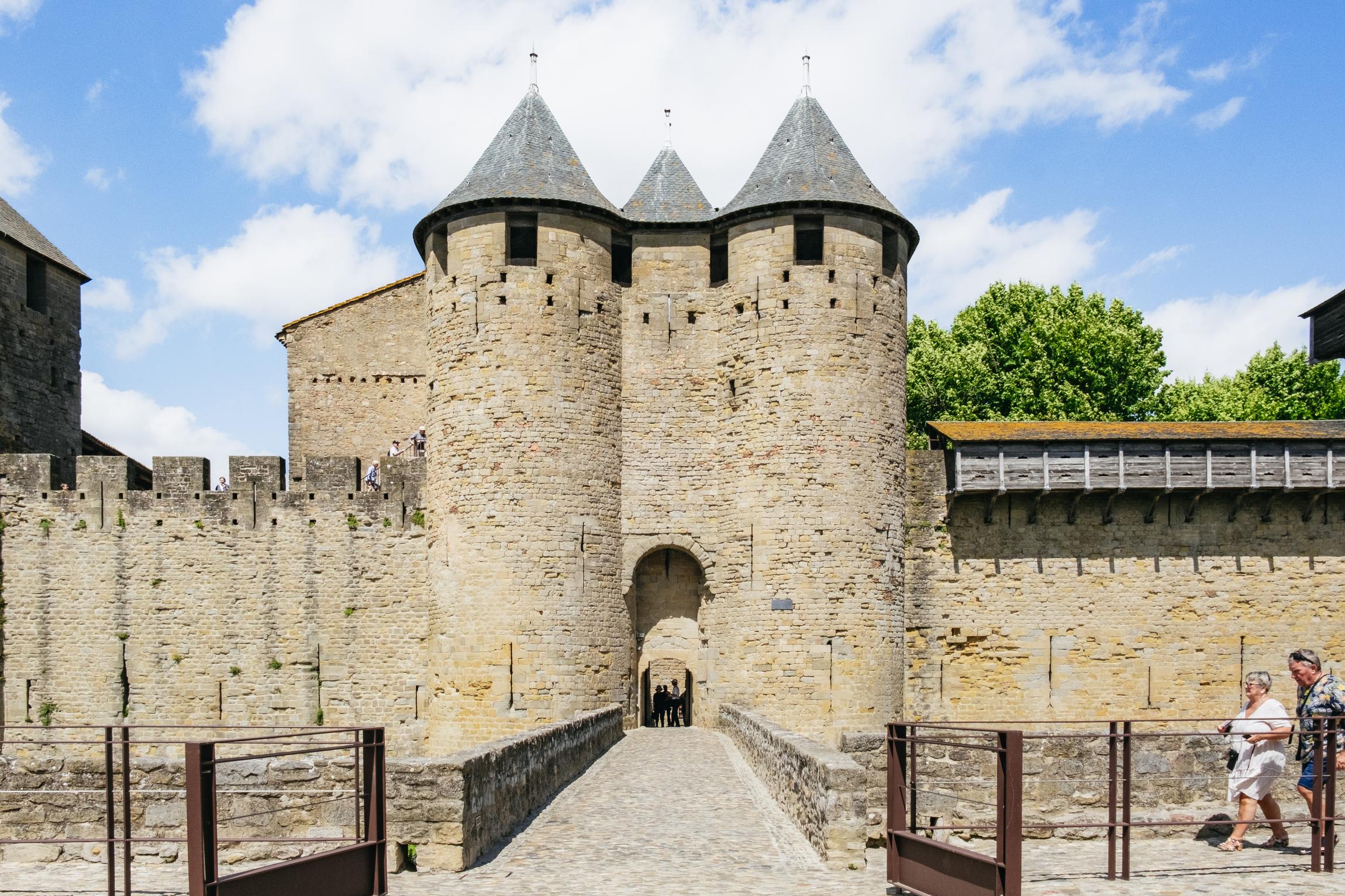
The main gate to the city, guarded by two massive towers. It remains the primary entry point for a toulouse to carcassonne tour.

Grand Puits

One of the oldest wells in the city, historically vital for survival. Legend says it holds ancient treasure.

Head to head

Carcassonne Medieval City vs Albi and Cordes-sur-Ciel: Selecting the Right Toulouse to Carcassonne Tour

They complement each other; most visitors who do both find the fortress of Carcassonne more immersive for history, while the Albi and Cordes-sur-Ciel day trip offers a broader cultural experience through diverse medieval landmarks. Selecting a toulouse to carcassonne tour requires deciding between singular architectural focus and multi-town variety.

Feature Top pick Carcassonne Albi & Cordes-sur-Ciel
Focus
Twin historic towns
Travel Time
1.5 hours by road
Historical Depth
Episcopal city and bastide
Pace
Active multi-stop itinerary
Walking Intensity
Moderate (varied town centers)

Verdict: Choose the Carcassonne tour tickets if you prefer uninterrupted exploration of a single massive UNESCO heritage site, or opt for the Albi and Cordes-sur-Ciel day tour if you prefer viewing a wider spectrum of regional architecture via a professional toulouse to carcassonne tour tour.

How your ticket works

Book your ticket in 3 steps

  1. 01

    Book online

    Choose your ticket, select your date, and reserve in under two minutes. Secure checkout handled by our verified partner.

  2. 02

    Receive your mobile voucher

    Instant confirmation by email, with a mobile voucher you can save offline. No printing, no queuing at a collection desk.

  3. 03

    Show & enter

    Arrive at the entrance, show your voucher on your phone, and walk in. Most tickets include priority or skip-the-line access.

Plan your visit

Everything you need to know before you go

Practical details for your visit straight from our verified partners — hours, access, rules, and how to get there.

Open today · 10:00–18:30
Opening Hours
10:00–18:30
Address
Château Comtal, Rue Viollet le Duc, 11000 Carcassonne, France
Accessibility
Ramparts have limited wheelchair access due to terrain
Best arrival
10:00–12:00
Storage
No lockers available on site
Navigation
Follow signs for Cité de Carcassonne
Mon
10:00–18:30
Tue
10:00–18:30
Wed
10:00–18:30
Thu
10:00–18:30
Fri
10:00–18:30
Sat
10:00–18:30
Sun
10:00–18:30
Closed on: Jan 1 (New Year's Day), May 1 (Labor Day), Nov 1 (All Saints' Day), Nov 11 (Armistice Day), Dec 25 (Christmas Day)
Main entrance

Porte Narbonnaise

Place Saint-Nazaire

Main entrance to the walled city

Address
Château Comtal, Rue Viollet le Duc, 11000 Carcassonne, France
Storage
No lockers available on site
Navigation
Follow signs for Cité de Carcassonne

How to get there

🚆
Public transport · 1 hour · 15-20 EUR

Regional train service from Toulouse-Matabiau to Carcassonne station takes approximately 1 hour.

🚗
Car · 1.5 hours · Toll fees apply

Take the A61 motorway from Toulouse; follow signs for Cité de Carcassonne to reach the parking lots.

Dress code

Comfortable walking shoes are recommended for the uneven stone paths throughout the medieval fortress.

Bags & security

Security checks may be performed at the entrance. Large suitcases are not permitted inside the historical site.

Photography

Photography for personal use is permitted throughout the ramparts and the interior of the Château Comtal.

Accessibility

The ground floor of the Château Comtal is accessible, but the ramparts and towers feature many steps and uneven surfaces.

Mobile phones

Mobile phone use is allowed. Please silence devices during guided tours of the fortress interior.

What to bring

  • Sunscreen
  • Hat
  • Water bottle
  • Comfortable shoes
  • Valid ID
  • Printed or digital toulouse to carcassonne tour tickets

Not allowed

  • Sharp objects
  • Drones
  • Large luggage
  • Alcohol
  • Tripods
  • Professional camera gear
  • Weapons
  • Flammable items
  • Paint/Markers

Families & strollers

Strollers are difficult to maneuver on the cobblestones. Baby carriers are highly recommended for your toulouse to carcassonne tour.

Food & drink

Picnicking is prohibited inside the monument. Many cafes are located in the surrounding medieval town.

Pets

Only guide dogs for the disabled are allowed inside the Château Comtal and the museum areas.

Good to know

Visitors taking a toulouse to carcassonne tour should allow at least 3 hours to fully explore the fortifications.

Meeting point

Where to find us

Porte Narbonnaise

Place Saint-Nazaire

Main entrance to the walled city

Get directions
Around your visit

Everything else worth knowing

Best time to go, insider tips, nearby landmarks, and the cancellation fine print — flip through to skim what matters to you.

Best time to visit

How crowds, weather, and events shift across the year.

Spring

Mild temperatures and thinner crowds make this ideal for walking the ramparts.

Summer

Expect high temperatures in July and August; arrive by 10:00 to avoid heat.

Autumn

Pleasant weather continues through October, perfect for photography tours.

Winter

Cold but very quiet, offering a peaceful experience of the medieval site.

Helpful tips for your visit

Small details that turn a good visit into a great one.

Avoid peak heat

Start your toulouse to carcassonne tour by 10:00 to avoid the midday sun.

Book in advance

Secure your toulouse to carcassonne tour tickets online to save time at the ticket office.

Wear comfortable shoes

The ramparts involve significant walking on uneven stone surfaces.

Check the website

Visit the official site for real-time updates on closures or events.

Stay hydrated

Carry a water bottle as the stone walls reflect the summer heat.

Nearby landmarks

Non-bookable sights within a short walk — free to visit, easy to pair.

Basilica of Saints Nazarius and Celsus

5 min

A beautiful site known for its blend of Romanesque and Gothic architectural styles.

Place Marcou

10 min

The central hub of the medieval city surrounded by vibrant cafes and shops.

Grand Puits

5 min

A historical deep well located in the heart of the Cité de Carcassonne.

Cancellation policy

Flexible, no hidden fees.

Requests made 24 hours before the scheduled time are eligible for a full refund. Standard adult entry for Castle and Ramparts is 13 EUR.

Where to stay

Hotels & districts near the attraction

Hand-picked options within walking distance — pick a district for vibe, or a specific hotel for convenience.

Hotel de la Cité

2 min
luxury

Historical hotel located within the medieval walls of the fortress.

Best Western Le Donjon

3 min
boutique

A charming hotel set inside a converted medieval building.

Carcassonne City Center

15 min
mid-range

Various guest houses located in the lower town near the river.

About

The place, in context

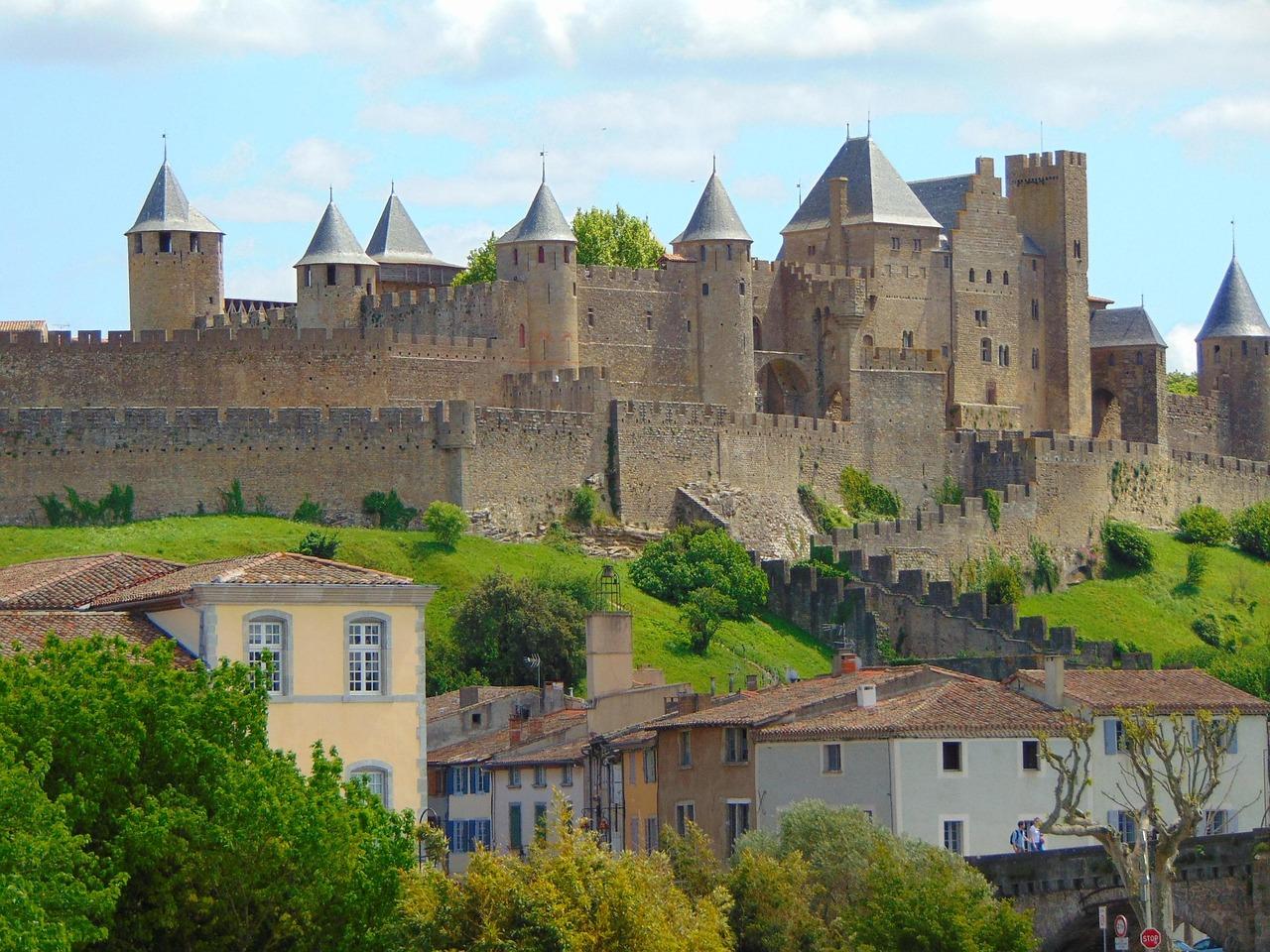
The double ramparts of Carcassonne stretch three kilometres around a hilltop settled by Romans in the first century BCE, fortified by Visigoths in the fifth century, expanded by Trencavel viscounts in the twelfth, and methodically restored by Eugène Viollet-le-Duc between 1853 and 1879. By 1850 the medieval Cité had decayed so thoroughly that municipal authorities debated demolition; Viollet-le-Duc's intervention saved fifty-two towers, the Château Comtal, and the Basilica of Saints Nazarius and Celsus, earning UNESCO World Heritage designation in 1997. The architect's conical slate roofs remain controversial among purists who argue that original Languedoc towers wore flat terracotta tiles, yet his vision created the silhouette recognized worldwide today. Ninety-two kilometres separate Toulouse and Carcassonne, a distance Roman engineers covered in two days on the Via Aquitania, medieval pilgrims in three on the Chemin de Saint-Jacques, and modern coach services in ninety minutes on the A61 autoroute. The route crosses the Lauragais plain, a golden corridor of sunflower fields and wind turbines between the Pyrenees foothills and the Montagne Noire. Carcassonne's strategic value derived from this geography: the citadel commanded the narrowest passage between Atlantic and Mediterranean watersheds, a chokepoint contested in the Albigensian Crusade of 1209, the Hundred Years' War, and France's 1659 annexation of Roussillon. When the Treaty of the Pyrenees pushed the Spanish border southward, Carcassonne lost military relevance; prosperity migrated to the Bastide Saint-Louis across the Aude River, leaving the upper town to decay for two centuries. Today the Cité receives four million visitors annually, making it France's third most visited monument after the Eiffel Tower and Mont-Saint-Michel. The Château Comtal, built by the Trencavel dynasty in the twelfth century and reinforced by Louis IX in the thirteenth, anchors the complex. Its inner courtyard displays Gallo-Roman fragments and medieval millstones; the rampart walk offers unobstructed views across the Aude valley to the Pyrenees. The Basilica of Saints Nazarius and Celsus combines Romanesque nave with Gothic transept, its stained glass dating to the thirteenth and sixteenth centuries. Rue Cros-Mayrevieille and Rue du Grand Puits retain cobblestones and timber-frame facades reconstructed by Viollet-le-Duc using medieval building techniques. Evening illumination, installed in 2008, highlights the ramparts' layered construction: Roman foundations in dark stone, Visigothic repairs in brick, and twelfth-century additions in pale limestone.

"Viollet-le-Duc's conical slate roofs remain controversial among purists who argue that original Languedoc towers wore flat terracotta tiles, yet his vision created the silhouette recognized worldwide."
Your experience

What a tour day looks like

A step-by-step walkthrough of the visit — what you'll see, how long each stage takes, and the details that matter.

You board your coach in central Toulouse at 8:30, crossing the Canal du Midi before joining the A61 autoroute eastward. The Lauragais plain opens wide beyond the window, sunflower fields alternating with cereal crops as the Pyrenees fade to a blue line on the southern horizon. Ninety minutes later you crest the final rise and the Cité appears ahead: fifty-two towers crowding a limestone ridge above the Aude River. You enter through the Porte Narbonnaise, passing between twin barbican towers into the lices — the grassy corridor separating inner and outer ramparts. Viollet-le-Duc's restoration is everywhere: the hoarding galleries overhanging the walls, the arrow slits carved in geometric precision, the slate roofs that purists debate. You climb to the Château Comtal's rampart walk at 10:00, before tour groups saturate the passages. The view stretches south to Pic de Bugarach and east across vine-covered slopes toward the Mediterranean, one hundred fifty kilometres distant. Inside the basilica, thirteenth-century rose windows filter afternoon light into jeweled fragments on the nave floor. You descend through Rue du Grand Puits, where half-timbered houses lean toward cobblestones worn smooth by eight centuries of foot traffic, and pause at a café terrace facing the ramparts before your return transfer departs at 17:00.

Frequently asked

Frequently asked questions about toulouse to carcassonne tour tickets

What are the opening hours for the site?

The site is open daily from 10:00–18:30.

Is the toulouse to carcassonne tour accessible for wheelchairs?

Only parts of the site are accessible due to the medieval architecture.

Where can I purchase toulouse to carcassonne tour tickets?

You can purchase your toulouse to carcassonne tour tickets via the official site.

What is the price for entry?

Standard adult entry for Castle and Ramparts is 13 EUR.

Are there recommended arrival times for my toulouse to carcassonne tour?

For the best experience, arrive between 10:00–12:00 to avoid crowds.

Can I bring bags into the Château Comtal?

Large bags are prohibited inside the Château Comtal.

Is there a dress code for the tour?

There is no strict dress code, though comfortable shoes are essential.

How long should I budget for a visit?

Allow 3-4 hours to see all highlights of the medieval city.

Are pets allowed inside?

No pets except for assistance dogs are permitted inside.